

Traffic Sources 2026: TikTok, Instagram, YouTube, Telegram
Which Traffic Source to Choose in 2026: TikTok, Instagram, YouTube or Telegram
For an affiliate marketer, an online school or an e-commerce store, the traffic source shapes almost everything: customer acquisition cost, testing speed, content resources and even the product format. In 2026, most projects choose between four platforms: TikTok, Instagram, YouTube and Telegram. Here's how they differ in audience, cost and complexity, which tasks each one suits and which accounts you'll need to get started.
If you need several accounts on different platforms for testing, you can find them at zfxshop.biz. It saves time on registration and initial warm-up.
Which traffic sources matter in 2026
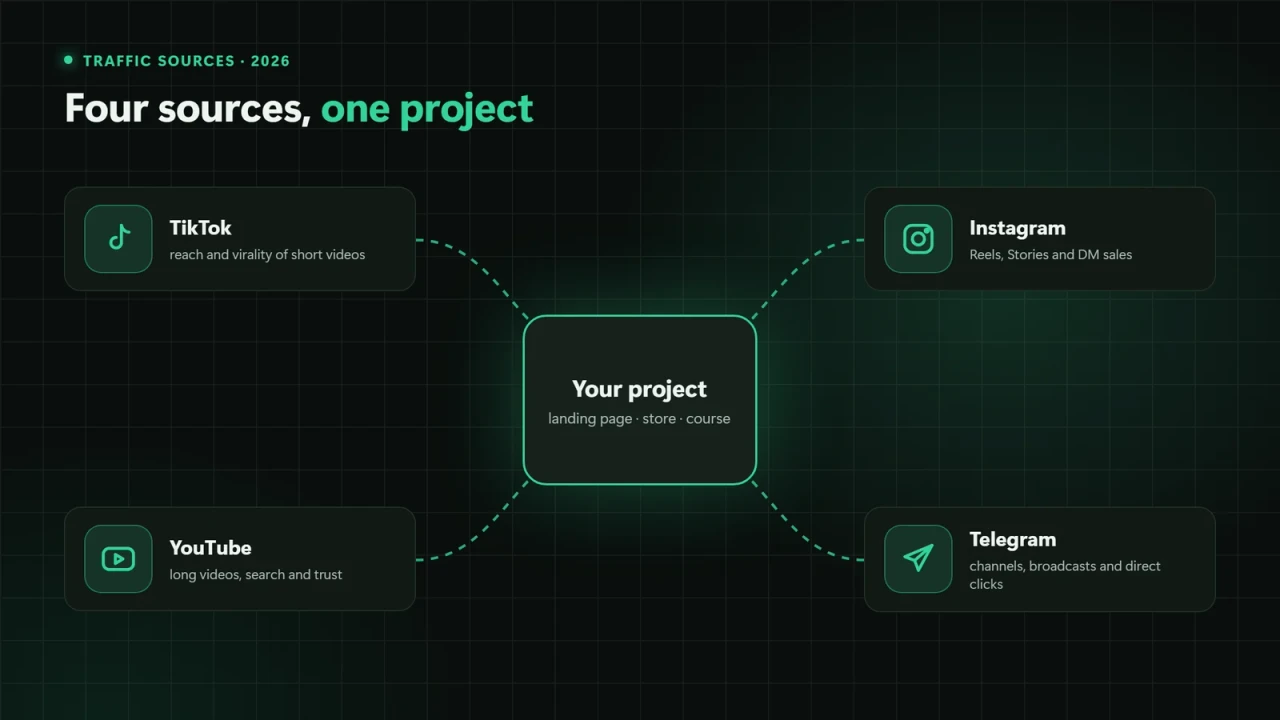
Social networks and messengers remain the main acquisition channel for projects that sell through content and ads. Each of the four platforms covers its own part of the funnel:
TikTok delivers mass reach through short videos and its recommendation algorithm.
Instagram combines reach through Reels with nurturing in Stories and sales in DMs.
YouTube builds trust and search visibility: long videos live for years and bring a warm audience.
Telegram is about direct contact: channels, broadcasts, bots and link clicks with no middleman.
How the platforms compare: audience, cost and complexity
| Platform | Audience | CPM benchmark | Main format | Difficulty to start |
|---|---|---|---|---|
| TikTok | 1.59B ad reach | $3-10 | vertical videos, 15-60 s | low for content, medium for ads |
| 3B monthly, 2B daily | $5-15 | Reels, Stories, DMs | medium | |
| YouTube | about 2.5B ad reach | $10-30 | long videos and Shorts | high: needs production |
| Telegram | 1B+ monthly | depends on format and channel | channels, paid posts, bots | medium |
CPM ranges are Hubfluence's aggregated estimates for 2026. Real costs depend heavily on niche, geo, season and creative quality. For example, Triple Whale data across nearly 5,900 brands puts TikTok's median CPM for August 2025 - July 2026 at about $4, and Meta's at about $15. A cheap impression isn't a cheap customer, so compare platforms by cost per action.
TikTok: reach and fast testing
TikTok offers the cheapest reach among the major platforms
TikTok is the best choice when you need big reach fast and want to test many ideas. The algorithm shows videos to new audiences even without followers, and ads are cheaper on average than on other major platforms. In many markets, TikTok Shop lets users buy without leaving the app.
Best for: mass-market e-commerce, mobile apps, entertainment and education products with a broad 18-34 audience.
Limitations: creatives burn out fast, so you need a constant flow of new videos. For expensive or complex products, the path from view to purchase is longer.
How to start: switch to a business account, post 10-15 organic videos to learn which topics and formats land, then promote the best ones through Ads Manager. This lowers testing costs, because only creatives proven in organic go into ads.
Instagram: reach, nurturing and sales
On Instagram, reach, nurturing and sales happen in one app
Instagram is strongest where trust decides the sale. Reels bring new audiences, Stories warm up followers and DMs turn interest into leads. Ads run through Meta's ad account and can show on Instagram and Facebook at the same time.
Best for: experts, online schools, services, local businesses, fashion and beauty brands, mid-priced e-commerce.
Limitations: organic reach is lower than on TikTok and ads cost more. DM sales need a team that answers quickly.
How to start: set up your profile as a storefront with a clear bio, Highlights with reviews and FAQs, and a link to your site or bot. Then run Reels for reach and ads with a messages or leads objective, and handle inquiries with ready-made scripts.
YouTube: long videos and a warm funnel
YouTube brings the warmest audience but needs more content resources
YouTube has the longest content life cycle. A review or tutorial can draw viewers from search and recommendations for years, and those viewers already trust the creator. According to DataReportal, YouTube ads reach about 2.5 billion people, the largest ad audience among social platforms. Ads run through Google Ads, and Shorts add short-form reach.
Best for: online education, B2B, complex and expensive products, SaaS, product reviews and projects with a long decision cycle.
Limitations: high production and ad costs, and organic growth starts slowly.
How to start: list your audience's search queries and record 5-10 videos answering the most popular ones. Add links in descriptions and pinned comments, and use Shorts as teasers for longer videos.
Telegram: channels, broadcasts and direct links
Telegram gives direct contact with your audience without an algorithmic feed
In March 2025, Telegram announced it had reached 1 billion monthly active users. Its key feature is the lack of an algorithmic feed: channel posts reach subscribers directly, and link and button clicks are rarely lost. You can attract audiences through the official Telegram Ads platform, which shows ads in public channels with 1,000+ subscribers, and through paid posts in niche channels. Bots handle leads, payments and broadcasts.
Best for: online schools, media and expert blogs, communities, repeat sales and customer retention.
Limitations: no viral mechanics, channel growth requires ads or paid posts, and placement channels need careful vetting.
How to start: create a channel with a clear description and a pinned post, prepare 10-15 posts before launching ads and set up a bot for leads. Before buying paid posts, check channel stats: subscriber growth, post reach and audience activity.
Which accounts you need to start on each platform
| Platform | For content | For ads | For analytics |
|---|---|---|---|
| TikTok | TikTok business account | TikTok Ads Manager; Business Center for teams | TikTok Pixel, Events API |
| professional account (creator or business) | Meta business portfolio and ad account | Meta Pixel, Conversions API | |
| YouTube | channel on a Brand Account | Google Ads with advertiser verification | Google Analytics 4, Google Ads tags |
| Telegram | channel and bot | Telegram Ads, directly or via official partners | UTM tags, channel and bot stats |
Register every account to yourself or your company and turn on two-factor authentication right away. If a team or contractor works on the project, give access through roles in business tools rather than sharing passwords.
How to choose a source for your project
Start from the product and sales cycle
Impulse buy, mass-market product: TikTok, then Instagram Reels.
A service or product where trust matters: Instagram and Telegram.
An expensive product with a long decision cycle: YouTube, with Telegram for retention.
Repeat sales and community: Telegram.
Consider your content resources
TikTok and Reels need frequent short videos, YouTube needs fewer but well-produced videos, and Telegram needs regular posts. Choose a platform where you can create content consistently for at least three months.
Test with numbers
Start with two platforms, give each the same test budget and compare not CPM but cost per lead or purchase and return on spend. After 4-6 weeks, scale the winner and use the second source for nurturing and retention.
Plan how platforms work together
TikTok + Telegram: short videos bring people to a channel where regular posts warm them up and a bot sells.
Instagram Reels + DMs: the video sparks interest and a manager closes the lead in chat.
YouTube + Telegram: long videos build trust and the channel retains the audience for repeat purchases.
TikTok or Instagram ads + landing page + retargeting: the classic setup for stores and online schools.
Which metrics to track during a test
| Metric | What it shows | Why it matters |
|---|---|---|
| CPM | cost per 1,000 impressions | compare the price of reach across platforms |
| CTR | clicks as a share of impressions | see whether the creative hooks people |
| CPC | cost per click | understand the cost of site traffic |
| CR | conversion to lead or purchase | check traffic and landing page quality |
| CPA | cost per action | the main metric for comparing sources |
| ROMI | return on marketing investment | decide which source to scale |
Before testing, decide what CPA is acceptable for your project. Then scaling or stopping a source is based on economics, not gut feeling.
Common mistakes when choosing a traffic source
1. Following trends instead of the product. The platform "everyone is on" may not fit your product or audience.
2. Comparing by CPM. Cheap impressions can bring the wrong audience. Compare cost per lead and return on spend.
3. Tests that are too short. Algorithms need time to learn. Plan at least 2-4 weeks and enough budget to gather data.
4. One creative per test. A weak video doesn't mean a weak platform. Test several formats and angles.
5. No analytics. Without a pixel, UTM tags and lead tracking, you can't tell which source works.
6. One platform forever. Relying on a single source leaves you exposed to algorithm and pricing changes. Keep at least one backup channel.
7. No content resources. A platform where you can't post regularly won't deliver stable results, either in organic or in ads.
FAQ
Which traffic source is the cheapest?
By cost per impression, TikTok usually leads in 2026. But the final cost per customer depends on the product: for expensive or complex offers, YouTube and Instagram often deliver a lower CPA because they bring a better-prepared audience.
Can I run ads without my own content?
You can, but results are usually better when the brand has an active profile. Users check the account before buying, and an empty profile lowers trust. Organic content also helps you understand which topics and formats to scale in ads.
Is Telegram a good fit for an online store?
Yes, especially for repeat sales: curated picks, subscriber discounts and restock alerts work well in a channel and through a bot. To acquire new customers, Telegram is usually paired with TikTok or Instagram.
Where can I get accounts for testing on several platforms?
Ready-made accounts for TikTok, Instagram, YouTube and Telegram can be found at zfxshop.biz. It's handy when you want to launch tests on several platforms at once.
Conclusion
There's no universal traffic source. TikTok wins on the cost of reach, Instagram on combining reach and sales, YouTube on depth of trust, and Telegram on direct contact with the audience. The most resilient projects in 2026 combine two or three platforms, with one driving acquisition and another handling nurturing and repeat sales. Start with the one that best fits your product and resources, and make decisions based on cost per customer, not cost per impression.